Latest Projects
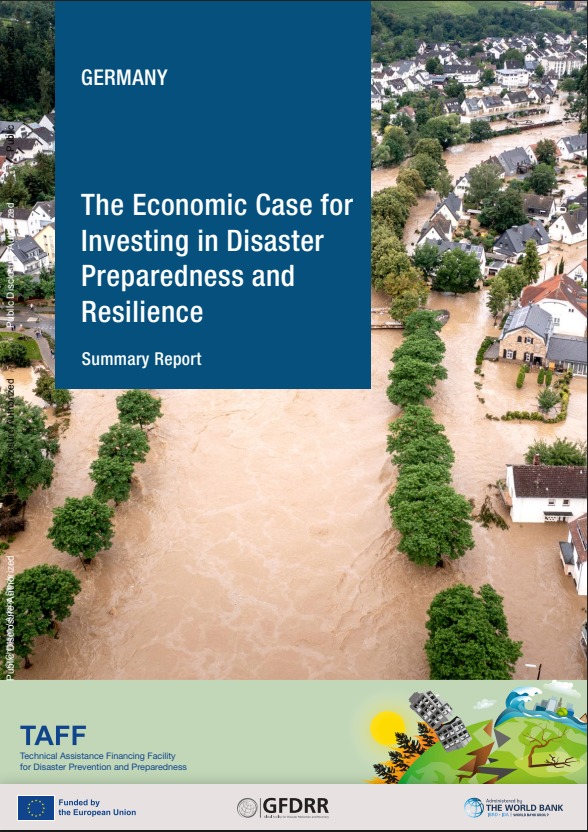
Germany - The Economic Case for Investing in Disaster Preparedness and Resilience: Summary Report & Technical Report
Client: World Bank Group
Role: Research, analysis, author
Completed: 2026
This report presents a strong economic case for investing in disaster and emergency preparedness in Germany. Specifically, this report aims to help policymakers identify and prioritize the most urgent and cost-effective opportunities to bolster the country’s resilience, thereby improving preparedness not only for climate-related disasters, but for a wide range of future shocks. It also emphasizes the high benefit-cost ratios (BCRs) and multiple benefits of resilience investments that can arise regardless of whether a disaster hits. The report shows that as risks in Germany evolve, so too must the solutions, thus requiring continuous efforts to monitor risks and strengthen civil protection capabilities. Specific contributions include: wildfire emergency response, social perceptions to flood emergency response and management. Specific contribution to wildfire emergency management, wildfire early warning, flood risk social perception and emergency management.
Click here to view project website and publications.
From Risk To Resilience: Strengthening Preparedness for Wildfires and Earthquakes in Europe
© European Union 2018 (photo by Pavel Koubek)
Client: World Bank Group
Role: Research, analysis, author
Completed: 2025
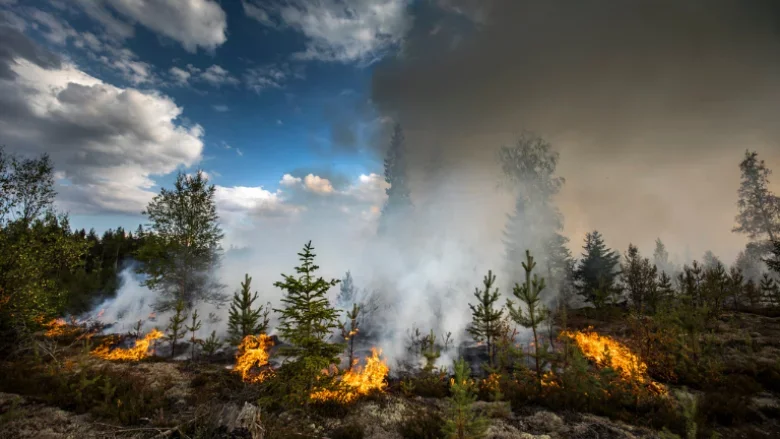
A new series of reports by the World Bank Group and the Global Facility for Disaster Reduction and Recovery, funded by the European Union, under the Technical Assistance Financing Facility (TAFF) for Disaster Prevention and Preparedness sets out practical measures to strengthen Europe’s preparedness for wildfires and earthquakes. Specific contribution includes: Lead authorship/research on European Union Wildfire Risk Management, Cyprus Wildfire Risk Management, and Knowledge Note on Integrated Wildfire Risk Management; Review of Croatia Wildfire Risk Management.
Click here to view project website and publications.
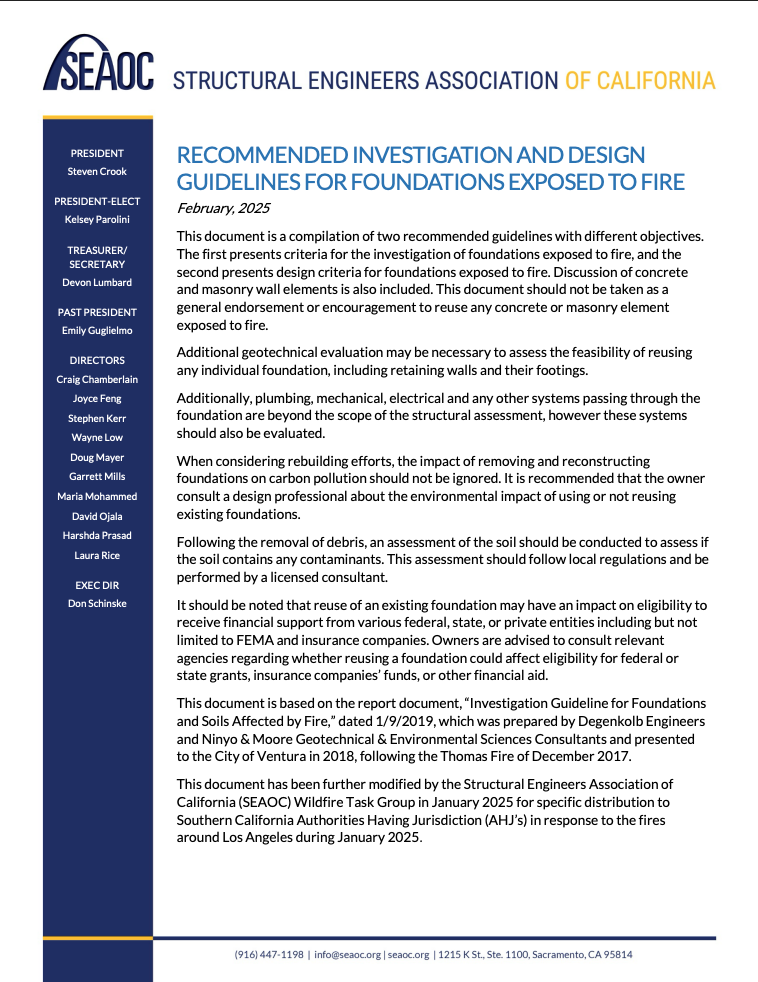
Structural Engineers Association of California - LA Fire Working Group
Organization: Structural Engineers Association of California (SEAOC)
Role: Volunteer contributor
Completed: February 2025
In response to the LA wildfires, an ad-hoc SEAOC working group compiled updated recommendations for the evaluation of foundations following wildfires.
Click here to view the publication.
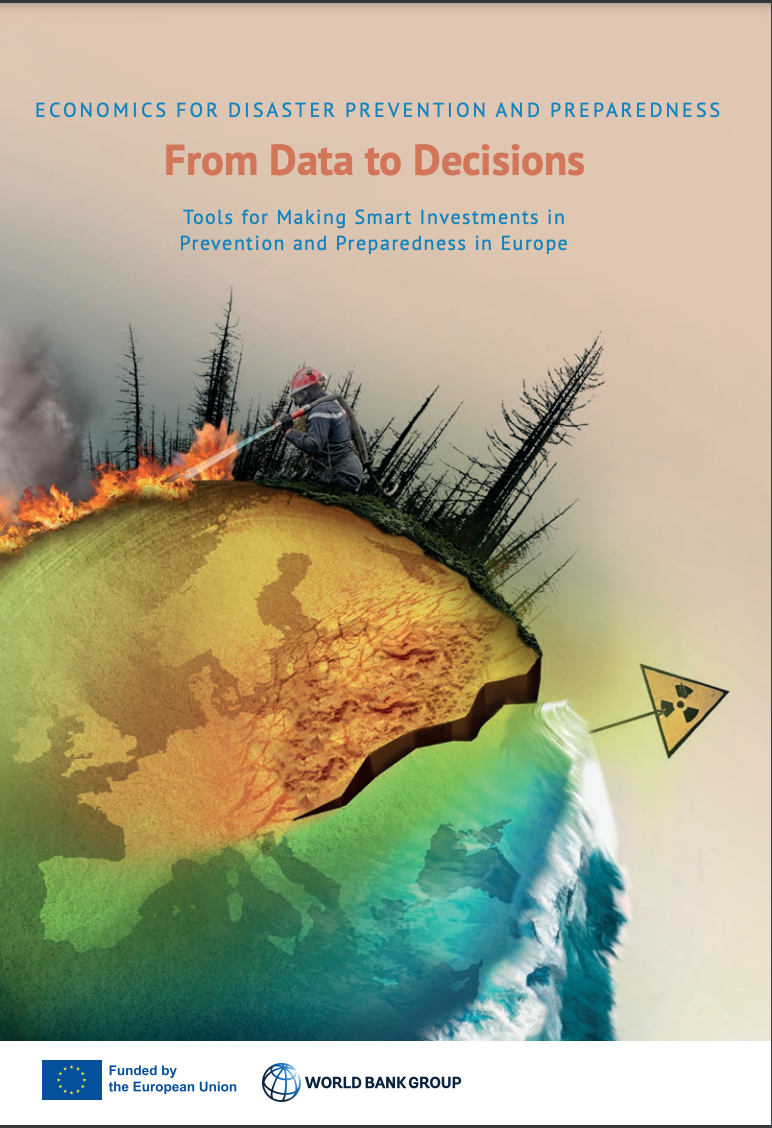
Economics for Disaster Prevention and Preparedness in Europe
Client: World Bank Group
Role: Research, analysis, author
Completed: May 2024
The report provides new insights into the costs for countries in the European Union to adapt to the impacts of climate change, new costing approaches, and best practices with estimated ranges for various sectors and multiple risks.
Click here to view project website.
Turkey Seismic Resilience and Energy Efficiency in Public Buildings Project
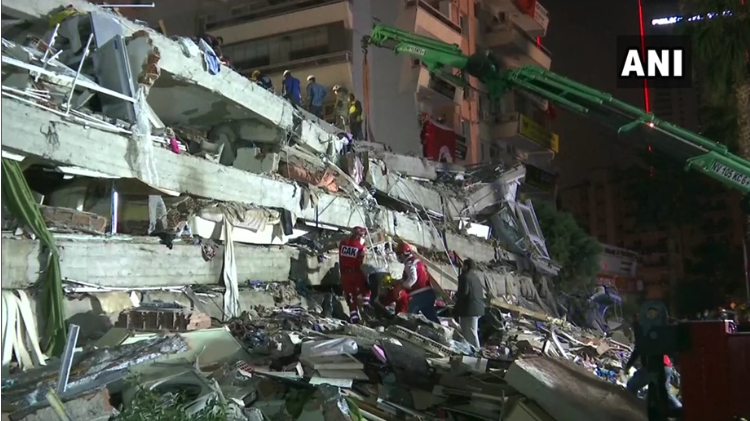
Building Damage in Turkey. Image Credit: ANI
Client: World Bank Group
Role: Research, analysis
Ongoing: 2022-
This project focuses on hospitals, schools, administrative buildings, and other public buildings that will be retrofit for improved seismic resistance and enhanced energy efficiency.
Click here to view program website.
Architect’s Role in Creating Equitable Communities
Organization: American Institute of Architects
Role: Focus group participant
Completed: September 2022
This report discusses how architects can bring about racially just and equitable outcomes for all members of the community they serve.
Click here to view AIA website.
Universal Design in Building Regulation for Resilience

Image Credit: Michelle Dahlmanns, CC-BY 4.0
Client: Global Facility for Disaster Reduction and Recovery (GFDRR) and World Bank Group
Role: Research
Involved: 2021-2022
Research conducted and guidance developed on universal design principles for buildings.
Click here to view the Building Regulations for Resilience website and final publication (2025): A Global Assessment of Building Codes.
Greece National Disaster Risk Management Plan Inputs and Recommendations
Client: World Bank Group, General Secretariat for Civil Protection Greece
Role: Research, analysis, report writing
Completed: October 2021
This report provides recommendations for the proposed National Disaster Risk Management Plan (NDRMP) of Greece. The input consists of existing and proposed measures and financing opportunities for disaster risk with the goal of disaster risk prevention, preparedness, and resilience.
Click here to download Inputs and Recommendations for the Development of a Draft NDRM Plan for Greece (English). Washington, D.C. : World Bank Group.
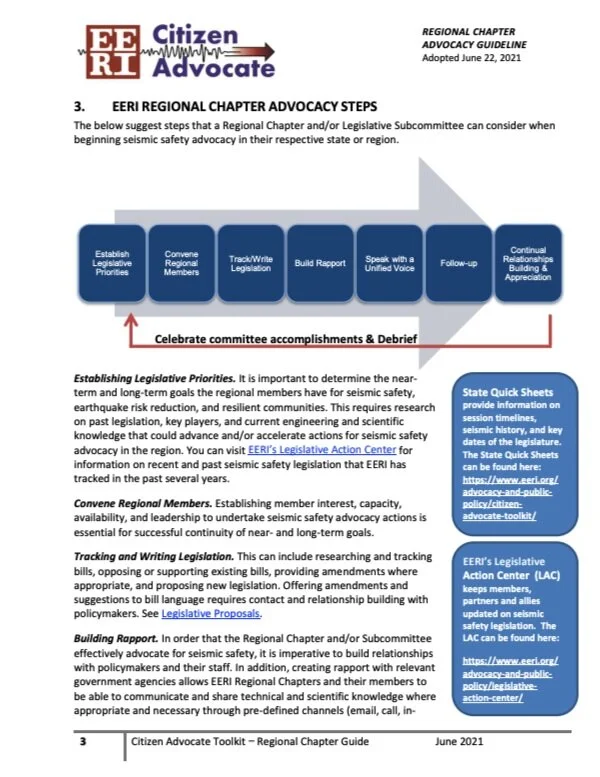
Earthquake Engineering Research Institute’s Regional Chapter Citizen Advocate Guidelines
Client: Earthquake Engineering Research Institute (EERI) a 501(c)(3) non-profit organization
Role: Development and Management
Completed: June 2021
These guidelines are for EERI Regional Chapters to support seismic safety advocacy in their state, region, and city. The document includes protocols, suggestions, and examples of Regional Chapters to self-organize for advocacy within the parameters of EERI’s mission statement and vision. This is a companion guide to the EERI Citizen Advocate Toolkit written by EERI’s Public Policy and Advocacy Committee (PPA) in 2020 which focuses on seismic safety advocacy by individual EERI members, and is also relevant to the topics discussed in this document.
Click here to view the Citizen Advocate landing page. You can download Regional Chapter Citizen Advocate Guidelines by clicking here.
Economics for Disaster Prevention and Preparedness
Client: World Bank Group and European Commission
Role: Analysis, report writing, design
Completed: April 2021
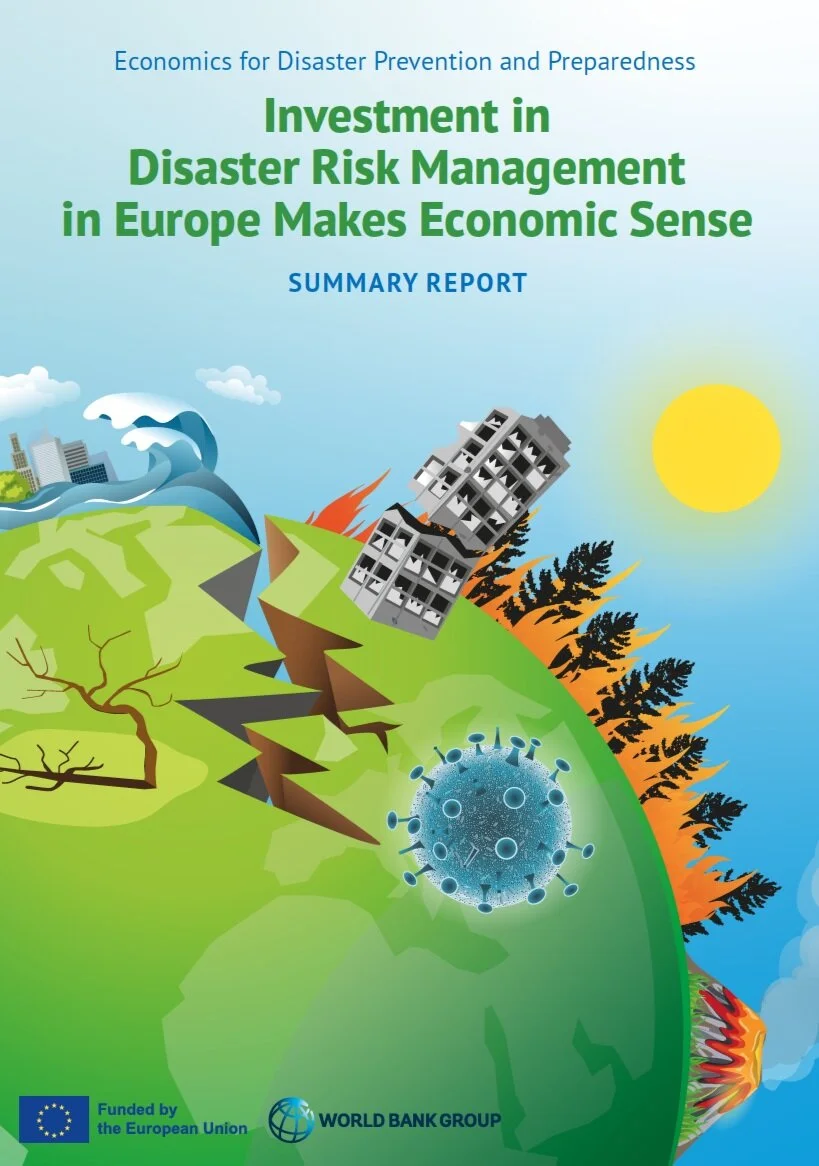
This World Bank supported the Union Civil Protection Mechanism under the European Commission to study Economics for Disaster Prevention and Preparedness to assess the costs and benefits of investments in disaster resilience and their financing at national and EU levels. More than 70 cases were studied and analyzed in the report to show that the benefits of investing in prevention and preparedness measures, including wildfires, earthquakes, floods, heatwaves, chemical spills, disaster mental health, and more.
The project composed of three studies, one of which is described above: Investment in Disaster Risk Management in Europe Makes Economic Sense. Click the links to view the Summary Report and the Technical Report.
Other project reports include Financial Risk and Opportunities to Build Resilience in Europe and Understanding the Needs of Civil Protection Agencies and Opportunities for Scaling up Disaster Risk Management Investments. Click here to see the landing page of all reports and here to view a short video on the project scope and results.
Assessment and Optimization Study for Fire and Rescue Stations in Armenia
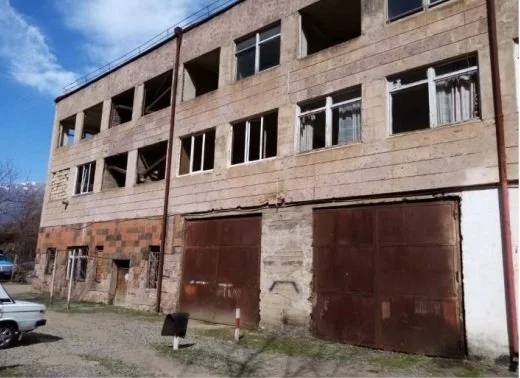
Image Credit: Mott MacDonald
Client: World Bank Group
Role: Management, analysis, report writing
Completed: November 2020
This project develops a service optimization plan for the fire/rescue and emergency response fatalities in Armenia. The report produces several options for investment plans for operational upgrading and strengthening fire/rescue and emergency response buildings in Armenia, a country prone to high levels of earthquake risk.
Click here to download Assessment and Optimization Study for Fire and Rescue Stations in Armenia (English). Washington, D.C. : World Bank Group.
Earthquake Risk in Multifamily Residential Buildings Europe and Central Asia Region
![Image from above of buildings collapsed following the [2019 Albania] earthquake. “Terremoto Albania” by Dipartimento Protezione Civile, licensed under CC BY 2.0](https://images.squarespace-cdn.com/content/v1/539c87fce4b020eefcd552a7/1597680271663-295PN5387HARBW4HILVL/Terremoto_Albania_%252849157136581%2529.jpg)
Image from above of buildings collapsed following the [2019 Albania] earthquake. “Terremoto Albania” by Dipartimento Protezione Civile, licensed under CC BY 2.0
Client: World Bank Group
Role: Analysis, report writing, design
Completed: August 2020
This project examines the seismic risk of multifamily residential buildings in 27 cities within Central Europe, the Balkans, Central Asia, and the Caucasus with including review of vulnerable building types in which nearly half of the population of the studied cities reside.
Click here to download Earthquake Risk in Multifamily Residential Buildings : Europe and Central Asia Region (English). Washington, D.C. : World Bank Group.
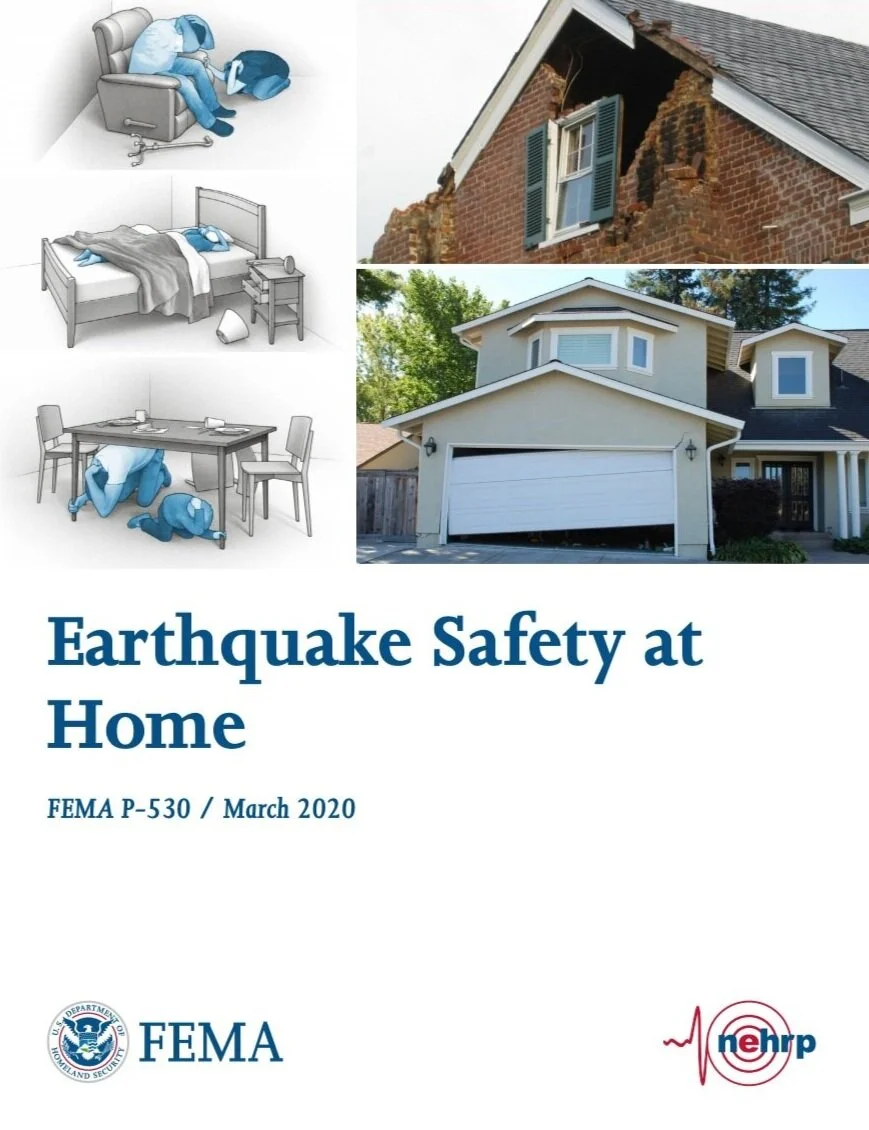
FEMA P-530: Earthquake Safety at Home
Client: Federal Emergency Management Agency (FEMA), Applied Technology Council (ATC)
Role: Management consultant & Art director (ATC)
Completed: March 2020
Half of all Americans live in areas subject to earthquake risk, and most Americans will travel to seismically active regions in their lifetime. FEMA is fostering awareness of earthquake risks in the United States through the newly developed FEMA P-530, Earthquake Safety at Home. FEMA P-530 is intended to show readers why earthquakes matter where they live, and how they can “Prepare, Protect, Survive, Respond, Recover and Repair” from an earthquake. This publication will help readers become familiar with why and where earthquakes might occur. It discusses wide-ranging steps that readers can take to adequately prepare and protect themselves, their family, and their belongings. These include: developing family response plans, assembling earthquake disaster supplies, securing heavy objects and furniture, retrofitting a home, and more.
Click here to download FEMA P-530.
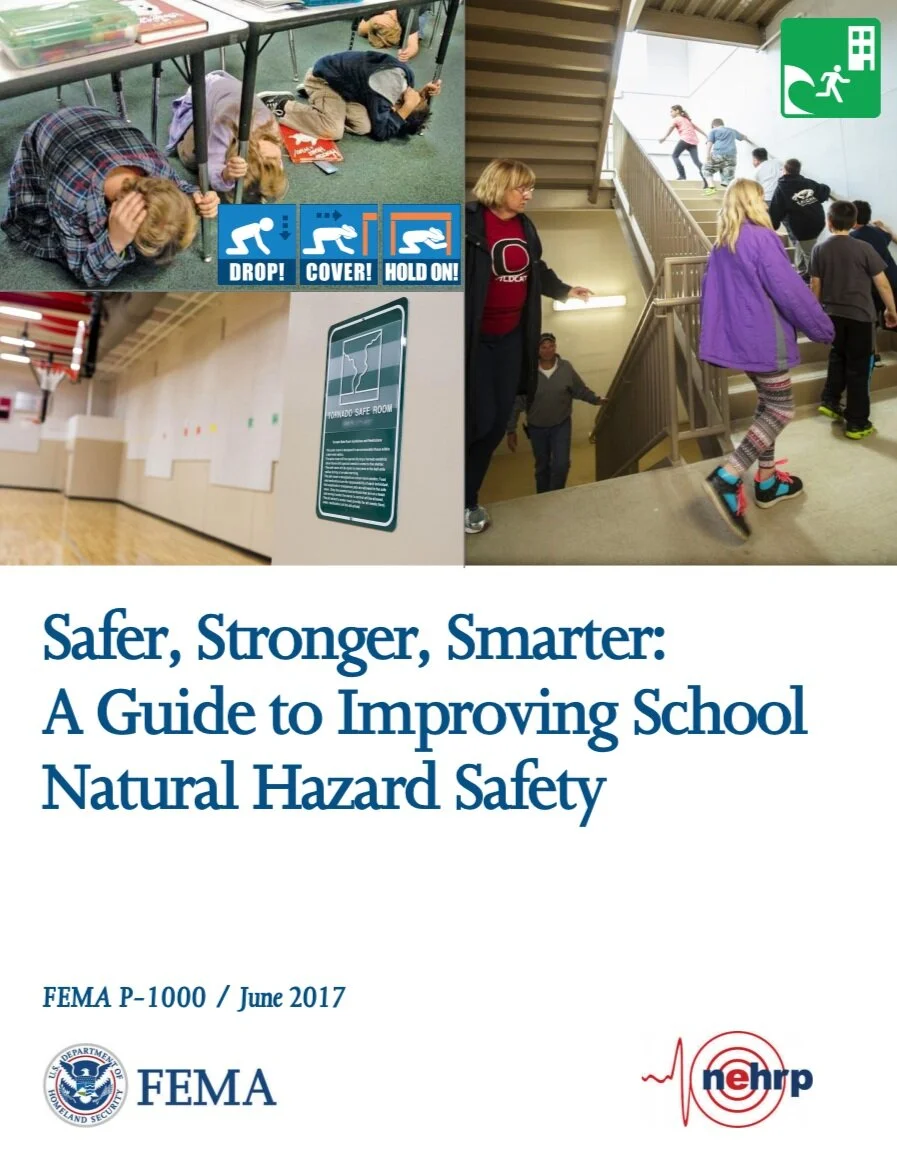
Outreach Plan for FEMA P-1000: A Guide to Improving School Natural Hazard Safety
Client: Federal Emergency Management Agency (FEMA), Applied Technology Council (ATC)
Role: Management consultant
Completed: 2019
Outreach planning for P-1000 intends to engage stakeholders to apply safety measures for multi-hazards affecting schools. This Guide (published in 2017) provides up-to-date, authoritative information and guidance that schools can use to develop a comprehensive strategy for addressing natural hazards. The Guide presents information on:
Identifying natural hazards that could potentially impact a school;
Making new and existing school buildings safer for children and staff, and more resistant to damage during natural disasters;
Planning and preparing for effective and successful response during a natural disaster;
Recovering after a natural disaster as quickly and robustly as possible, and being better prepared for future events; and
Engaging the whole community in the entire process in order to improve school and community disaster resilience.
Click here to download FEMA P-1000.
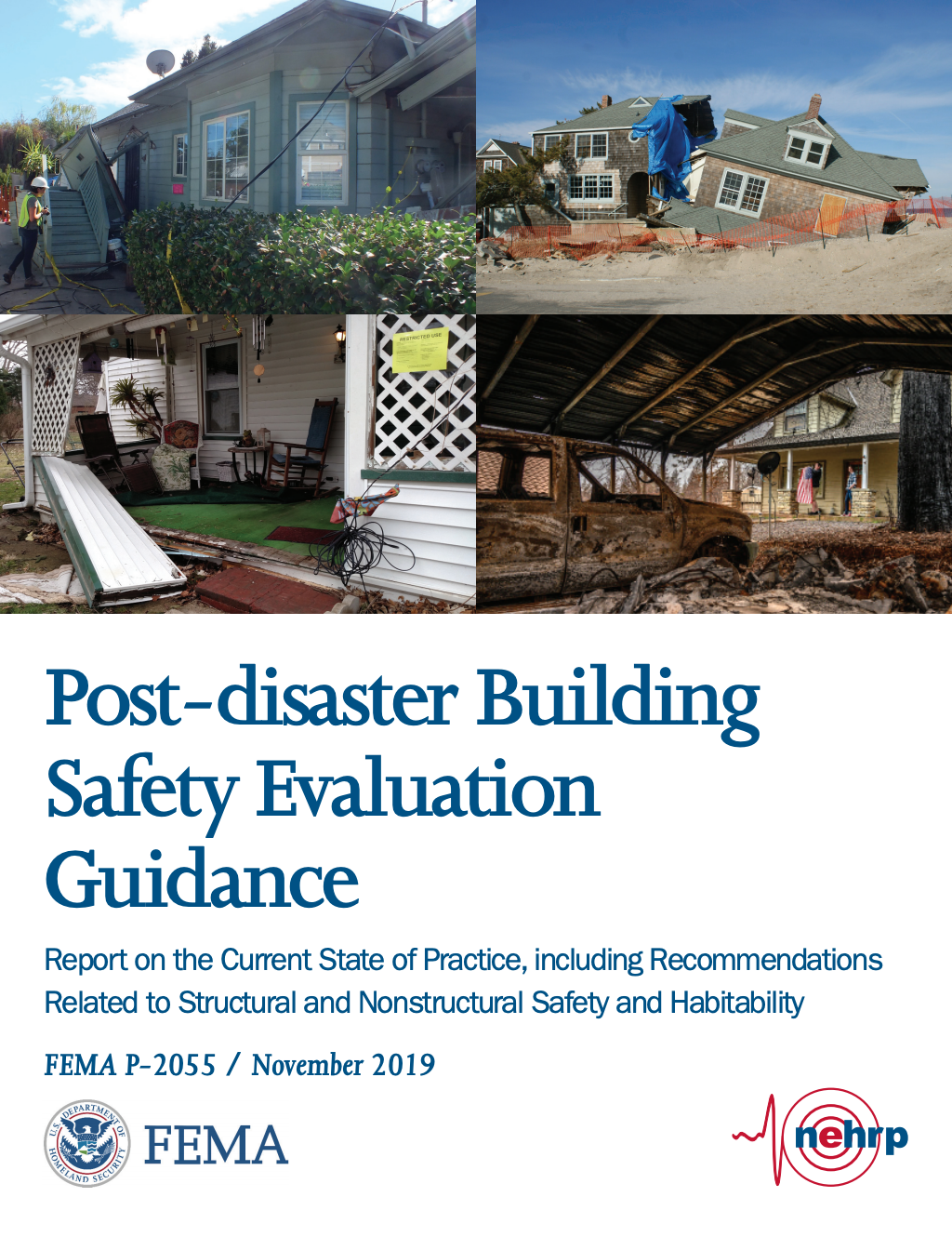
FEMA P-2055: Post-disaster Building Safety Evaluation Guidance
Client: Federal Emergency Management Agency (FEMA), Applied Technology Council (ATC)
Role: Management consultant
Completed: 2019
This report provides guidance on the best practices for post-disaster evaluation of buildings for both structural safety and habitability. This Guide summarizes and references best practice guideline documents, identifies recommended improvements and needs, and provides interim recommendations for issues without best practice guidance. The following incident types are covered: earthquakes; hurricanes; floods; tornadoes; tsunamis; landslides and other land instabilities; volcanoes; snow, hail, and ice storms; fire; and explosions. This Guide can be a reference for any post-incident evaluation process and is not limited by the scale or official declaration of a disaster.
Click here to download FEMA P-2055.
DRR Pathways Project
Client: Canada Safety and Security Program as sub-contract for Sage on Earth Consulting, Ltd.
Role: Disaster risk reduction and risk governance consultant
Involvement Completed: 2020
Serviced several components of the Disaster Risk Reduction Pathways initiative in Canada as a sub-contractor to Sage on Earth Consulting, Ltd.
The ‘DRR-Pathways’ project contributes to building disaster resilience in BC and in Canada by enhancing understanding of systemic risk, evidence-based disaster risk management (DRM), and delivering socio-economic value of investing in mitigation and adaptation measures in advance of major earthquake and flood events.
Learn more about the DRR Pathways Project here.
Vancouver B.C. Seismic Mitigation

Robson Square, Vancouver. Xicotencatl / CC BY-SA 4.0 (https://creativecommons.org/licenses/by-sa/4.0)
Client: Canada Safety and Security Program & Natural Resources Canada, as sub-contract for Sage on Earth Consulting, Ltd.
Role: Disaster risk reduction and risk governance consultant
Involvement Completed: 2019
As part of NRCan DRR Pathways project, offered risk governance and policy consulting as a sub-consultant to Sage on Earth, Ltd. in efforts to support the City of Vancouver in using quantitative risk results to develop and evaluate earthquake risk reduction policy options.
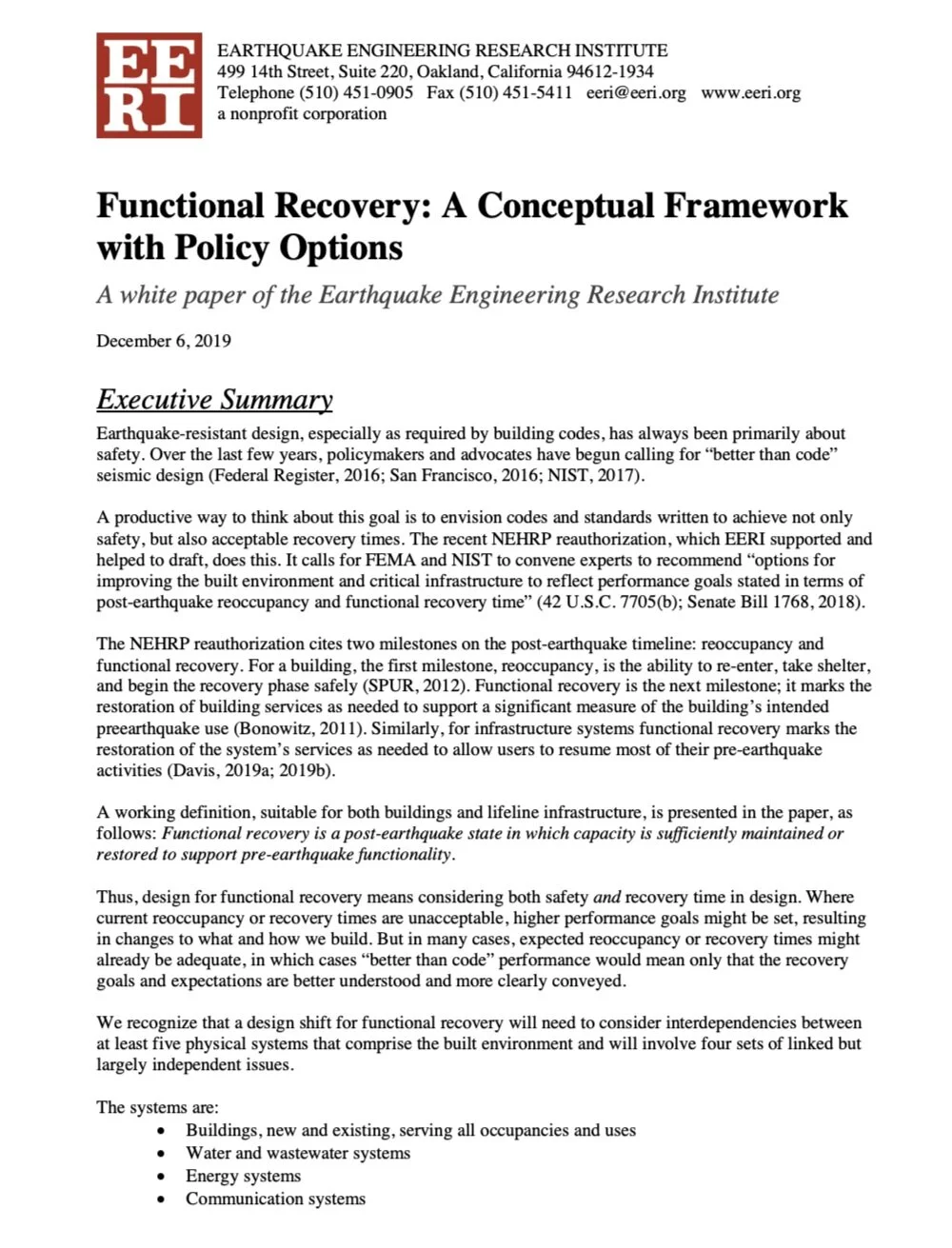
Functional Recovery: A Conceptual Framework with Policy Options
Client: Earthquake Engineering Research Institute (EERI) a 501(c)(3) non-profit organization
Role: Team Lead for Functional Recovery Task Group
Completed: 2019
Provided pr0-bono support as Task Group Lead in coordinating experts to develop the Functional Recovery white paper. This paper is in response to language in the December 2018 reauthorization of the National Earthquake Hazards Reduction Program (NEHRP). This language, suggested to Senator Diane Feinstein by EERI’s PPA in 2018 and passed in the final version of the bill, calls for FEMA and NIST to convene experts to recommend “options for improving the built environment and critical infrastructure to reflect performance goals stated in terms of post-earthquake reoccupancy and functional recovery time” (42 U.S.C. § 7705(b); 2018 Senate Bill 176).
Learn more about the Functional Recovery White Paper here.
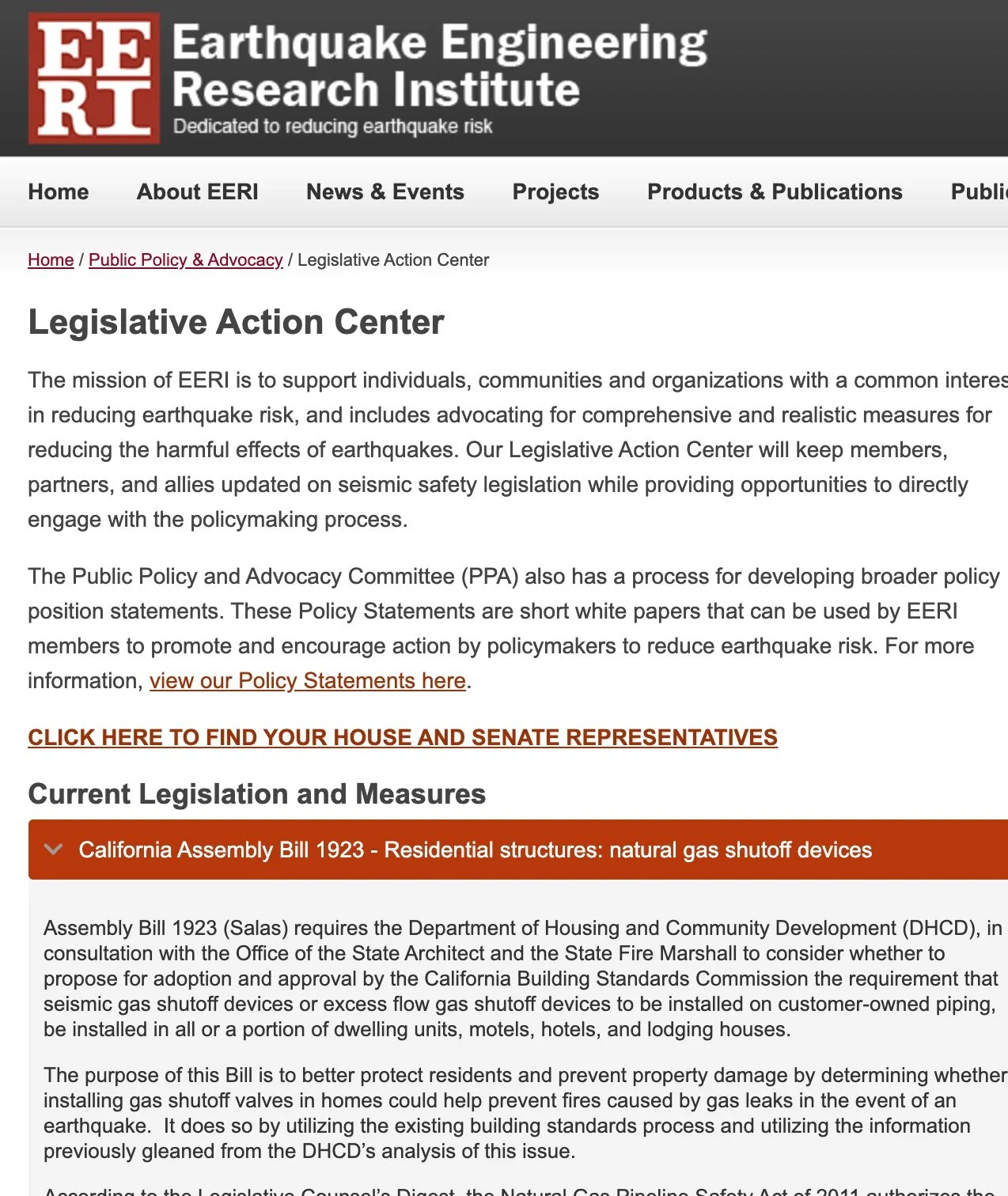
Earthquake Engineering Research Institute Legislative Action Center
Client: Earthquake Engineering Research Institute (EERI) a 501(c)(3) non-profit organization
Role: Management
Launched in 2019 with ongoing support
Supplied pr0-bono services to develop the Legislative Action center Resource page to build capacity for 3,000+ global EERI members in seismic safety advocacy knowledge.
The mission of EERI is to support individuals, communities and organizations with a common interest in reducing earthquake risk, and includes advocating for comprehensive and realistic measures for reducing the harmful effects of earthquakes. Our Legislative Action Center will keep members, partners, and allies updated on seismic safety legislation while providing opportunities to directly engage with the policymaking process.
Learn more about the Legislative Action Center here.
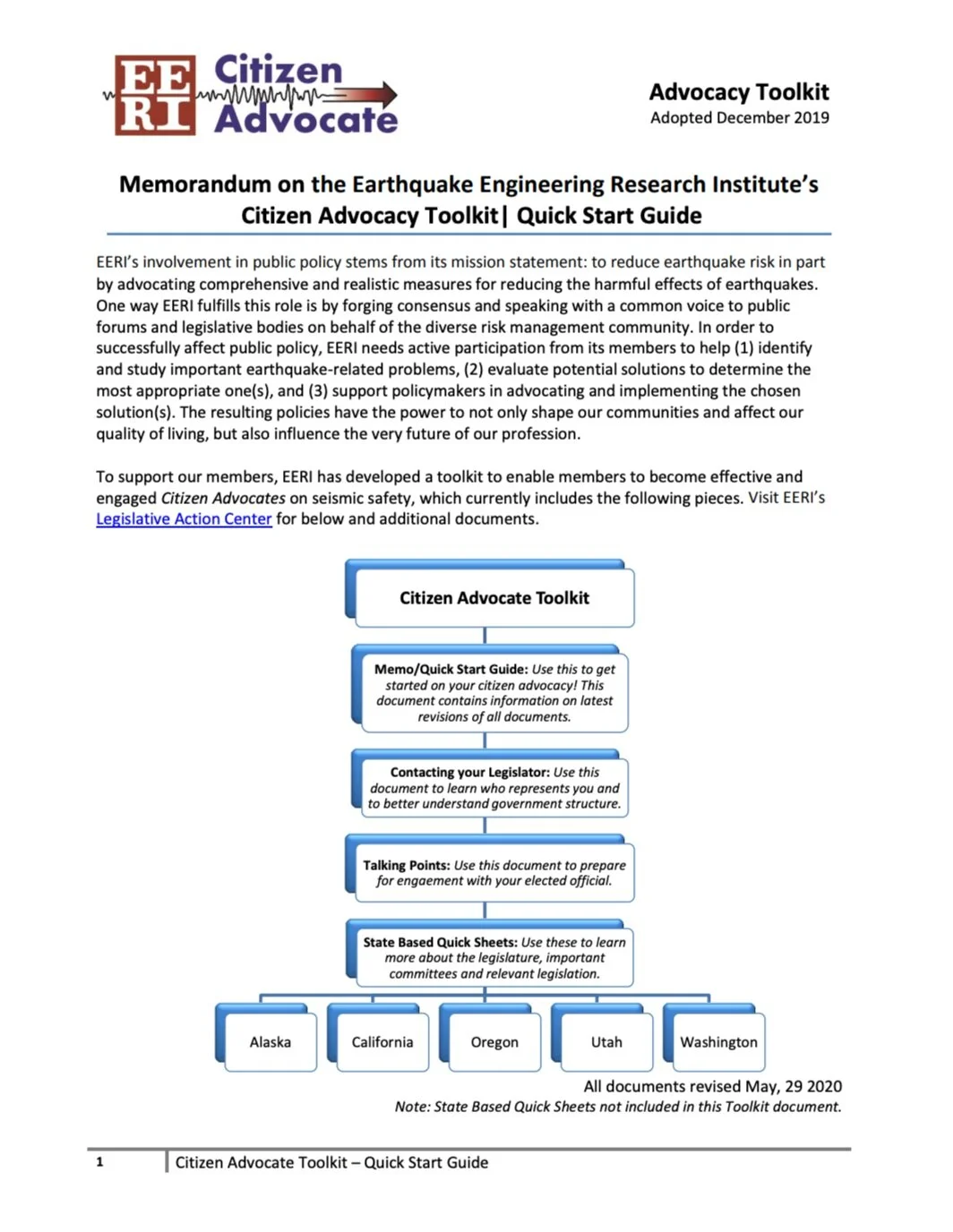
Citizen Advocate Toolkit
Client: Earthquake Engineering Research Institute (EERI) a 501(c)(3) non-profit organization
Role: Project lead
Completed: 2020
Offered pro-bono management and development support of the EERI Citizen Advocate Toolkit to develop science-to-advocacy capacity building and leadership to EERI’s 3,000+ members. The EERI Citizen Advocate Toolkit was developed to empower all EERI members to take action with lawmakers in their communities as seismic safety experts. The toolkit includes useful resources including how to find your legislators, the best way to advocate elected officials, and state-specific resources for getting started.
To learn more about the Citizen Advocate Toolkit and supporting documents, click here.
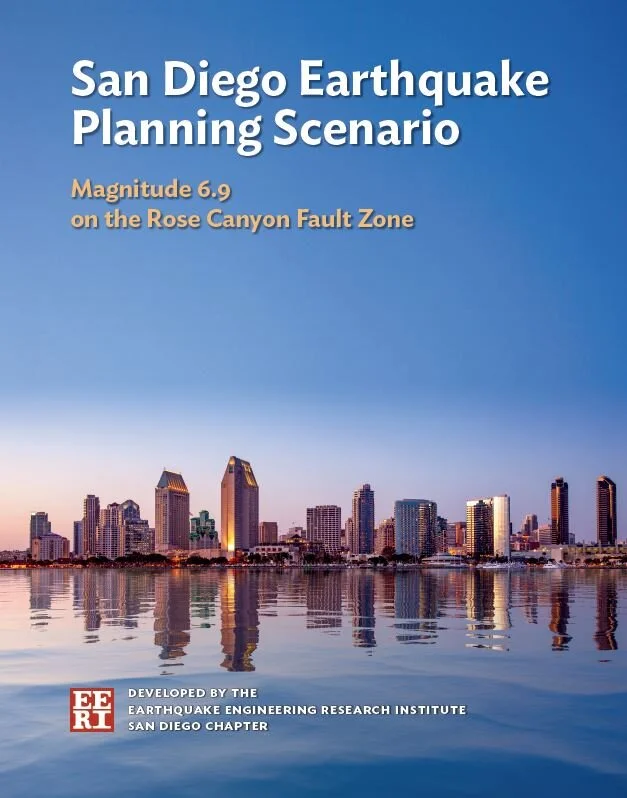
Policy Statement - San Diego Earthquake Planning Scenario
Client: Earthquake Engineering Research Institute (EERI) a 501(c)(3) non-profit organization
Role: Contributor
Completed: 2020
Offered pro-bono support for developing a policy statement based on the San Diego Earthquake Planning Scenario in collaboration with the EERI San Diego Chapter. Communicating risk and outcomes of earthquake scenarios for non-technical stakeholders and policymakers required easy-to-understand, non-threatening, and relatable messaging.
Learn more about the San Diego Earthquake Planning Scenario here.